
-
 History and Philosophy
The Forgotten Women of ENIAC: Programming Pioneers Written Out of Tech History
In the annals of computer history, the story often revolves around groundbreaking innovations, visionary engineers, and the machines that changed the world. However, a significant chapter remains largely untold: the critical contributions of women who played vital roles in the development of early computing systems, particularly the Electronic Numerical Integrator and Computer (ENIAC). Conceived in the 1940s, ENIAC was the first general-purpose electronic computer, and its programming was primarily carried out by a group of talented women who have largely been overlooked in the narrative of technological advancement.
-
 History and Philosophy
Alchemy to Chemistry: When Did Pseudoscience Become Real Science?
The transformation of alchemy into modern chemistry is one of the most fascinating stories in the history of science. Alchemy, often romanticized as the quest to turn base metals into gold and discover the elixir of life, is frequently dismissed as a pseudoscience. However, underlying its mystical and philosophical roots were principles that would pave the way for the rigorous discipline of chemistry.
-
 History and Philosophy
Galileo's Telescope: How One Instrument Sparked the Scientific Revolution
The dawn of the 17th century marked a pivotal moment in human history—the emergence of the Scientific Revolution. This transformative period reshaped humanity's understanding of the cosmos, laying the groundwork for modern science. Among the key figures of this revolution was Galileo Galilei, an Italian polymath whose use of the telescope fundamentally changed our perception of the universe. Through his groundbreaking observations, Galileo challenged long-standing astronomical theories, paving the way for a new empirical approach to science.
-
 History and Philosophy
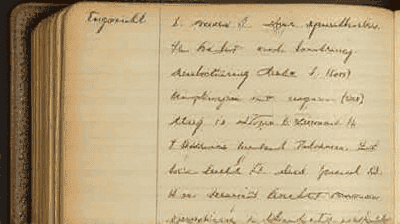
Marie Curie's Notebooks: Still Radioactive a Century Later – The Price of Discovery
Marie Curie is often celebrated as one of the most notable scientific pioneers of the 20th century. Best known for her groundbreaking research on radioactivity—a term she coined—Curie's work laid the foundation for advancements that would transform medicine, energy production, and our understanding of atomic science. However, her legacy is profoundly intertwined with the unforeseen consequences of her discoveries. Over a century after she conducted her research, her notebooks remain dangerously radioactive, serving as a sobering reminder of the cost of scientific discovery.
-
 History and Philosophy
The Rosetta Stone of Physics: How Newton's Principia Mathematica Decoded the Universe
When we think of pivotal moments in the history of science, few can rival the impact of Isaac Newton's 'Philosophiæ Naturalis Principia Mathematica,' commonly known as the Principia. Published in 1687, this groundbreaking work laid the foundations for classical mechanics and forever altered humanity's understanding of the natural world. Often likened to the Rosetta Stone for its role in deciphering the complexities of the universe, Newton's Principia provided a systematic framework for explaining the motion of celestial bodies and terrestrial objects.
-
 History and Philosophy
The Manhattan Project's Moral Dilemma: Science, War, and the Birth of the Atomic Age
The Manhattan Project remains one of the most significant and controversial scientific undertakings in history. This unprecedented effort during World War II led to the development of the atomic bomb, marking a profound shift in global power dynamics and ethical considerations surrounding science and technology. As scientists and military leaders raced to create a weapon capable of ending the war, they faced moral dilemmas that challenged their beliefs and the very nature of scientific pursuit.
-
 History and Philosophy
Lost Knowledge of the Library of Alexandria: How Much Science Vanished in the Flames?
The Library of Alexandria, located in the ancient city of Alexandria, Egypt, has long been regarded as one of the most significant centers of knowledge in the ancient world. Founded in the early 3rd century BCE under the Ptolemies, the library aimed to collect all the world's knowledge and serve as a beacon of learning for scholars from various cultures. However, through a series of catastrophic events, much of this incredible repository of knowledge was lost to the flames.
-
 History and Philosophy
The Fermi Paradox Revisited: New Philosophical Solutions to the Silence of the Universe
The universe is vast, containing billions of galaxies, each with millions or even billions of stars, many of which are likely to have planets capable of supporting life. Given these staggering numbers, the question that emerges is: Where is everybody? This conundrum is known as the Fermi Paradox, named after the physicist Enrico Fermi, who famously posed the question during a casual conversation in the early 1950s. While the probability of extraterrestrial civilizations existing seems high, the lack of evidence or contact presents a significant paradox.
-
 History and Philosophy
Darwin's Delay: Why He Waited 20 Years to Publish 'On the Origin of Species'
Charles Darwin's journey to publish 'On the Origin of Species' in 1859 marked a significant turning point in the history of science and philosophy. This seminal work introduced the theory of evolution by natural selection, fundamentally changing our understanding of biology and the diversity of life on Earth. However, what many may not realize is that Darwin took nearly two decades to publish his groundbreaking ideas.
-
 History and Philosophy
Pascal's Wager for AI: Should We Assume Superintelligence Will Be Friendly?
The rapid advancement of artificial intelligence (AI) presents both remarkable opportunities and profound risks. As we approach the possibility of superintelligent AI—intelligence that surpasses the best human minds in practically every field—we face critical questions about its nature and implications. Philosophical debates about the ethical considerations of AI development are increasingly relevant, particularly discussions surrounding the potential for superintelligence to be friendly or harmful. One such philosophical perspective that can illuminate our understanding of this dilemma is Blaise Pascal’s wager, originally formulated in the 17th century to address the question of belief in God.
Hot Posts
-

Best Practices for Disposing of Pet Waste: Keeping Your Home and Community Clean
-

Insurance Premiums Explained: Factors that Affect Your Coverage Cost
-

The Environmental Impact of Food Waste: Why Proper Disposal Matters
-

Top 10 Foods You Should Never Dispose of in Your Garbage Disposal
-

Types of Insurance: Exploring Coverage Options for Different Needs
-

Why Subscription Boxes Are the Future of Retail